
绅士的品格
Zero-tariff policies, systemic support help African countries expand exports, upgrade industry_我的网站

A |
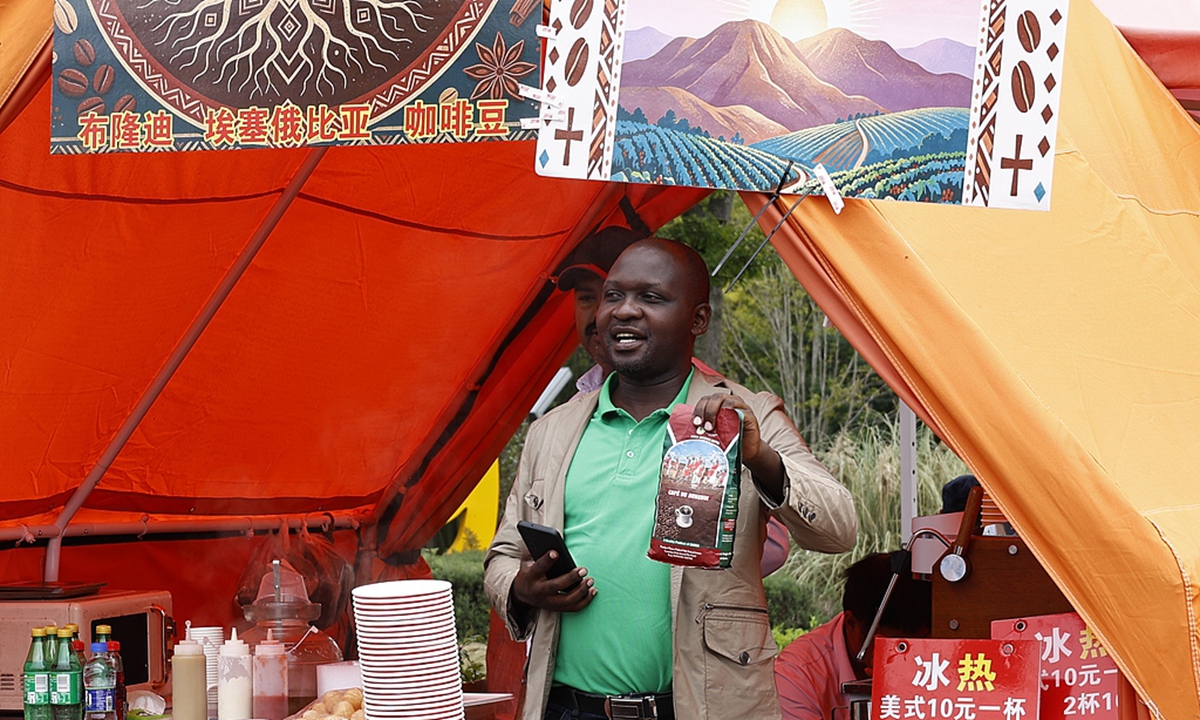

For Ethiopia, which is believed to be the birthplace of coffee, this initiative presents significant opportunities.
"Coffee is not only our leading agricultural export but also an integral part of our cultural heritage. For centuries, Ethiopians have preserved a unique coffee tradition, where families and neighbors gather to prepare and share coffee in a ceremony that symbolizes hospitality and friendship in community," Geleta said.
With improved market access, Ethiopian coffee exports to China are expected to grow substantially. China has become one of the world's fastest-growing coffee consumption markets and is now Ethiopia's third-largest coffee export destination, Geleta noted.
In 2025, China's coffee industry was valued at 354.9 billion yuan ($52.63 billion), up 13.3 percent year on year. Annual per capita consumption rose from 22.24 cups to 28.57 cups, while the value of coffee bean imports increased by 73.9 percent year on year, according to the 2026 China Urban Coffee Development Report released in July.
The Ethiopian diplomat believes China's zero-tariff policy will enhance the competitiveness of Ethiopian coffee, increase export earnings, and encourage greater investment across the coffee value chain, including processing, packaging, branding, logistics and quality certification.
Since July 20 this year, China has granted full market access to coffee beans meeting quarantine requirements from all African countries that have diplomatic ties with China. The full market access is regarded as a landmark achievement in China-Africa cooperation on agricultural market access.
Geleta said that Ethiopia warmly welcomes this landmark policy. Having joined China's zero-tariff arrangement in 2024, the East African country has already witnessed its positive impact on bilateral trade and economic cooperation.
"The policy goes beyond tariff preferences. It demonstrates a practical commitment to South-South cooperation based on mutual respect, shared development and win-win partnership," Geleta noted.
It creates new opportunities for African countries to diversify exports, strengthen productive capacity and participate more actively in global value chains, the diplomat said.
As members of the Global South, Ethiopia and China share a common vision of promoting inclusive and sustainable development. This zero-tariff initiative establishes a valuable benchmark for building agricultural trade rules that better reflect the development needs of emerging economies, she noted.
It also complements the objectives of the FOCAC and the African Continental Free Trade Area (AfCFTA) by supporting greater regional integration and international market access, said Geleta. AfCFTA is a flagship initiative of the African Union designed to transform the continent into the world's largest free-trade area, per the AU.
From Geleta's observation, the market access granted by China is not merely a trade policy, but also a practical example of development cooperation that benefits ordinary people.
Coffee farming sustains millions of Ethiopian households, so greater access to China's market bears direct significance for poverty alleviation, rural advancement and national economic transformation. The policies foster steady demand for Ethiopian coffee, increasing farmer's earnings and bolstering rural community resilience, she said. Such gains closely echo the China-proposed Global Development Initiative, which emphasizes poverty reduction, food security, inclusive growth and sustainable development.
The diplomat said Ethiopia welcomes Chinese investment in agricultural processing, cold-chain logistics, food manufacturing and value-added industries in Ethiopia. Such investment will support industrialization, technology transfer and job creation while strengthening resilient supply chains, Geleta added.

Mile said the policy provides a structured, phased approach to reducing trade difficulties and securing institutional guarantees. "It perfectly embodies the strong, historical foundations built through FOCAC over the years to forge a modernized, forward-looking economic future."
Amid comments saying that African countries still face challenges beyond tariffs, including logistics, standards and market-access capacity, Ambassador Mile of Lesotho said that tariff reduction is a necessary condition for trade expansion; however, more conditions are required to reach deals.
Take Lesotho, a landlocked country, for instance. The country faces acute logistical hurdles and high transport costs. Complying with sanitary and phytosanitary measures, as well as quality standards remains a massive challenge for many enterprises in Lesotho.
To fully benefit from the favorable tariff policy, Mile pointed to systemic technical support for African exporters, targeted investments in agro-processing, and enhanced trade facilitation.
"Initiatives recently introduced by China Customs, such as the 'Green Channel 2.0' for agricultural products and expanding authorized economic operator mutual recognition capacity building, are exactly the types of institutional support needed to overcome the non-tariff barriers," she elaborated.
。 本报讯 记者陈晶涛报道 近日,金星中学与渤海大学外国语学院联合成立党团共建基地并举行揭牌仪式。渤海大学外国语学院、区教育局、金星镇政府相关人员及金星中学50余名师生参加揭牌仪式。 活动现场,渤海大学外国语学院和金星中学代表分别发言,分享了共建基地的初衷和期望,以及未来合作的具体计划和方向。

B | 随后,双方负责人共同上台,为金星中学与渤海大学外国语学院党团共建基地揭牌。党团共建基地的建立,旨在加强两阶段教育之间的衔接与合作,共同培养有理想、有道德、有文化、有纪律的新时代青年,并通过双方的共同努力,为学生们搭建一个更加广阔的学习和成长平台。随着金星中学与渤海大学外国语学院党团共建基地的成立,双方将迎来更加紧密的合作与交流,成为连接初中与大学的桥梁,共同书写教育事业的新篇章。
Current article:http://oml8v4.dinggaxilianmaiyuejienianguai.shop/list_151nzx/3ympl.html
Published on:00:28:02
相关新闻
最后更新
- 太阳报:斯特林被指控危险驾驶等罪名,9月15日开庭
- Lily Collins reacts to Paris–Rome Buzz around Emily in Paris Season 5
- 跳高名将胡麟鹏怒斥“因怀孕退役、傍上富豪”等谣言:感受到造谣的恐怖,女性不是只有怀孕才作其他选择,是对我对待专业的一种亵渎
- Zhanjiang fishing-season deals top 5 bln yuan, boosting blue economy
- Azul Song Controversy: 3 हफ्ते में ही 43 मिलियन व्यूज... क्यों Guru Randhawa का गाना 'अजुल' पर मचा बवाल?
- Toxic: A Fairytale for Grown-ups; Makers Unveil 100 Days Countdown Poster
- 「私の推しはどこへいった」KAT-TUN解散からまもなく1年...ファン困惑の上田竜也〝衝撃〟最新ショットに「やばいっやばいっ」「何がどうなってる…」
- 累死勇士,金州赛程出炉
- 2026澳门世界杯即将打响!国乒男队能否夺回冠军?球迷不看好
- Top European Hotels Fight for Staff, Left With No Choice But To Hire Inexperienced Workers
热门新闻
- 美媒:美国对俄制裁不仅没生效,还损害美国利益,让中印捡了便宜
- 市数据局:以决战决胜姿态全力攻坚冲刺
- 活力中国调研行丨跨越68海里:一座海岛的两岸融合发展故事
- 能独立抽血的机器人获FDA授权
- 国会议员薪酬普涨 反对党呼吁优先给工人加薪
- 内马尔亲自招募!乌拉圭后卫:和他交谈是一种荣幸,我很感谢他
- China, India hold meeting on border affairs, pledge to jointly safeguard peace and tranquility in border areas
- Robot archer lights up ‘Zhixin’ as 2nd World Humanoid Robot Games open in Beijing
- 北京大学饶毅教授:禁止人类性细胞基因编辑
- 新车 | 增全新颜色,应用第五代混动技术,2025款比亚迪唐DM-i实拍